
Accounting for FedEx Linehaul contractors is fundamentally different from managing a standard, run-of-the-mill trucking company. Between weekly settlement statements, volatile fuel surcharges, escrow accounts, multi-entity owner structures, and massive fleet financing costs, many linehaul businesses operate with incomplete or downright misleading financial data.
The harsh reality is that generic accounting systems were never designed around how FedEx actually pays its independent contractors.
For a Linehaul contractor, accounting isn't just a painful tax-season chore; it is an operational steering wheel. A properly structured financial system is what tells you route profitability, equipment performance, cash flow health, labor efficiency, and the true cost of operating under the FedEx Ground model.
Here is how to structure your financial systems to stop flying blind and start driving profitability.
The Core Conflict: Standard Trucking vs. The FedEx Settlement Reality
Many contractors hire general bookkeepers or use out-of-the-box trucking templates. This is where the wheels start to fall off. Traditional trucking companies bill clients, send invoices, wait 30 to 60 days for payment, and track distinct loads.
As a FedEx Linehaul contractor, you don’t bill clients. You receive a highly structured, dense weekly settlement statement that crams gross revenue, variable bonuses, fuel surcharges, insurance deductions, chargebacks, and escrow withholdings into one confusing document ending in a single net deposit.
| Accounting Action | The Lazy Way (Net Deposit) | The Linehaul Way (Gross Settlement) | |
|---|---|---|---|
| Weekly FedEx Payout | Categorized as a single line item: Income. | Split into Gross Revenue, Fuel Surcharge, and Bonuses. | |
| Deductions (e.g., Insurance) | Ignored on the P&L (hidden inside the net deposit). | Broken out as an explicit Operating Expense. | |
| Escrow Withholdings | Treated as an expense when deducted. | Categorized as an Asset on the Balance Sheet. | |
| Operational Visibility | Zero. You know your bank balance, not your margins. | High. Clear view of true revenue vs. exact operating costs. | |
The Danger: If you only record the net deposit, your revenue is artificially low, your expenses are hidden, and your financial statements are virtually useless for securing bank financing or scaling your fleet.
Architecting the Ultimate Linehaul Chart of Accounts
Your Chart of Accounts (COA) is the foundation of your financial house. If it doesn't mirror the major categories on your FedEx settlement statements, your financial reporting will constantly be out of sync.
1. Revenue Categories (Keep Them Isolated)
Do not lump your payouts together. To accurately track operational margins, separate your inflows into:
Core Linehaul Revenue: Your base mileage and run pay.
Fuel Surcharge (FSC) Revenue: This must be isolated to evaluate how effectively the FedEx program offsets real-world diesel prices.
Bonus / Incentive Revenue: Peak season incentives, safety bonuses, and performance payouts.
Spot / Volatile Route Revenue: Unassigned or temporary runs that don't reflect your stable, dedicated lanes.
2. Operational Expense Categories
Group your expenses to reflect the actual costs of moving freight:
Direct Driver Costs: W-2 wages, 1099 contractor pay, per diem allocations, and payroll taxes.
Fuel & Over-the-Road Costs: Fuel card transactions, driver advances, and tolls.
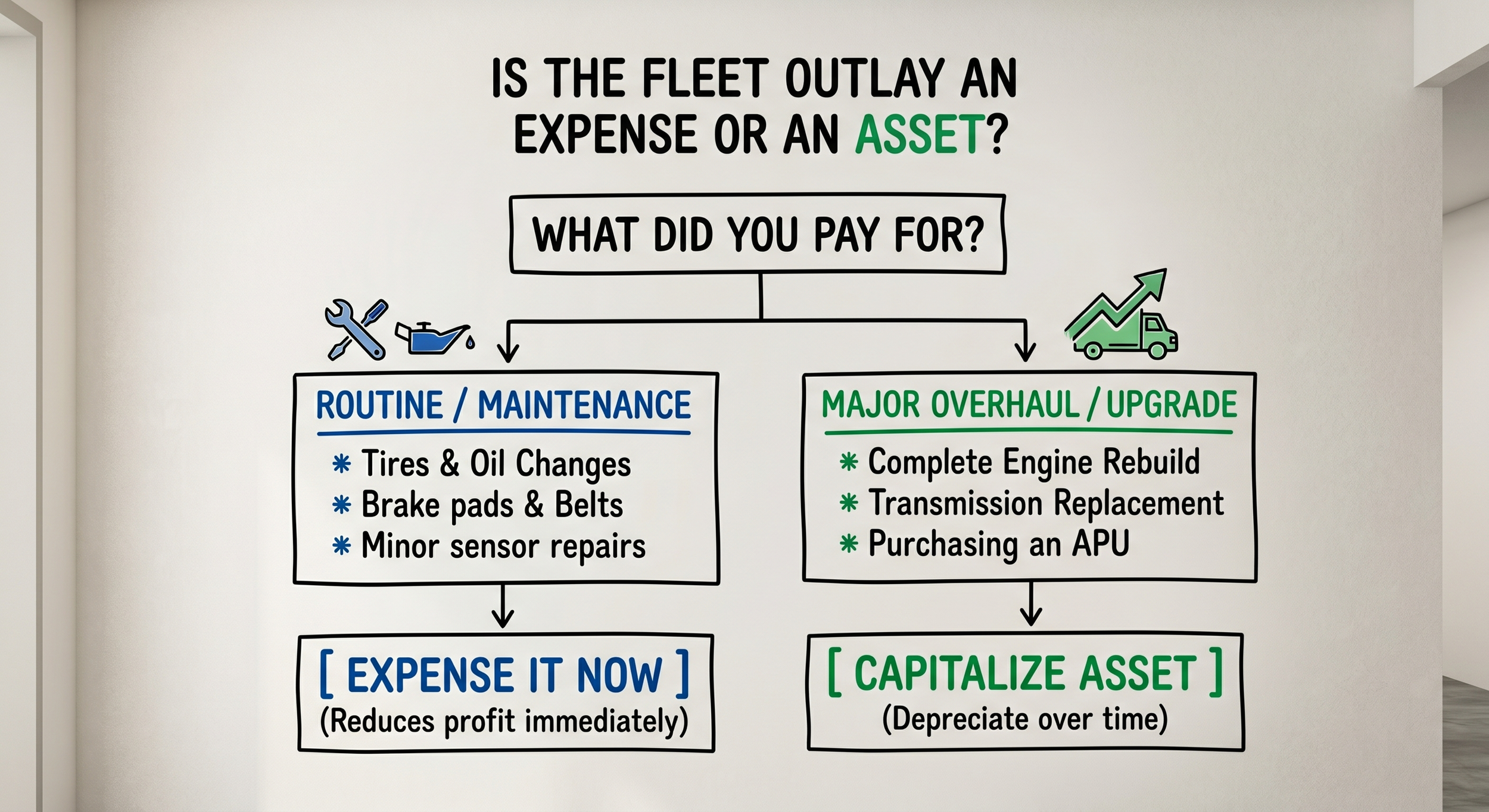
Fleet Maintenance: Subdivided by preventative maintenance (oil, inspections) vs. major repairs (tires, engines).
Anatomy of a Weekly FedEx Settlement Entry
To get a true picture of your financial health, your weekly bookkeeping entry must match your settlement down to the penny. Instead of a simple cash receipt, you or your accountant should enter a journal entry or a complex sales receipt every week.
The Accounting Split:
Debit Cash (Bank Account): The exact net deposit that hit your bank.
Debit Expense Accounts: Insurance deductions, uniform fees, chargebacks, or leased equipment fees withheld by FedEx.
Debit Asset Accounts: Escrow or maintenance reserves withheld by FedEx (money that is still technically yours).
Credit Revenue Accounts: Gross Linehaul Revenue, Fuel Surcharges, and Bonuses.
By recording the full picture, your Profit & Loss statement will finally reflect your true gross revenue and actual operating expenses, making you look significantly more professional to lenders and tax authorities.
The Capital Pitfalls: Fuel, Fleet, and Escrow Accounts
Fuel Surcharge Tracking
Fuel is routinely a contractor's largest or second-largest expense. Because the FedEx fuel surcharge fluctuates wildly with national diesel averages, you must track Fuel Surcharge Income directly against Realized Fuel Expense.
If your fuel costs rise by 15% but your total revenue looks flat because your FSC is lumped in with regular mileage pay, you might mistakenly assume your core routes are failing. Keeping them separate allows you to monitor your true fuel cost per mile.
Capital Assets vs. Repairs & Maintenance
When a truck breaks down, it’s painful. When it’s misclassified on your taxes, it’s expensive. You must clearly separate routine operational expenses from capitalizable assets.
The Escrow Trap
FedEx often holds back funds for maintenance escrows, insurance reserves, or security deposits. These are not expenses. They are assets belonging to your company until they are permanently forfeited.
If you treat escrow deductions as immediate expenses, your profits will look artificially deflated, and your balance sheet won't show the thousands of dollars in equity you actually hold with FedEx.
Labor Structures and Multi-Entity Realities
Driver Payroll Complexity
Whether you operate solo routes, team sleeper operations, or rely on relief drivers, your labor tracking must be precise.
W-2 vs. 1099: Misclassifying drivers is an audit magnet. Linehaul drivers are almost universally W-2 employees under modern labor interpretations.
Truck-Level Labor: If you aren’t mapping driver wages to specific trucks or routes, you cannot see which lanes are bleeding money due to inefficiencies or excessive overtime.
Multi-Entity Cleanliness
As Linehaul operations grow, smart owners often split their business into multiple entities—for instance, one corporate entity that holds the FedEx contract, and a separate LLC that owns the equipment and leases it back to the operating company.
While great for asset protection, this setup wreaks havoc on bookkeeping if you treat your corporate bank accounts like a personal piggy bank. Due to/From accounts, formalized lease agreements, and structured management fees must be used to record every single dollar moving between entities to avoid piercing the corporate veil or triggering an IRS nightmare.
Making QuickBooks Online (QBO) Work for Linehaul
QuickBooks Online is the industry standard, but out of the box, it’s just a digital checkbook. To make QBO a powerful operational tool for a FedEx business, implement these specific customizations:
Turn on Class or Location Tracking: Use "Classes" to represent individual truck units or specific dedicated routes. This allows you to run a P&L for Truck #104 to see if its maintenance costs are swallowing its mileage revenue.
Automate Fuel Card Imports: Integrate platforms like Comdata or Wex directly into your accounting software to prevent missing out-of-the-road expenses.
Establish a Settlement Clearing Account: Create a dummy bank account in QBO called "FedEx Clearing." Deposit the gross settlement components there, clear the deductions, and transfer the net amount to your real operating checking account. This keeps your bank reconciliations flawless.
Driving To The Bottom Line
Successful FedEx Linehaul contractors treat their accounting department exactly like they treat their fleet: as a highly calibrated machine built for efficiency.
By structuring your financials to mirror the FedEx settlement reality, isolating your fuel data, tracking costs at the truck level, and treating assets correctly, you transform your numbers from a historical record for the IRS into a dynamic, forward-looking roadmap for growth.