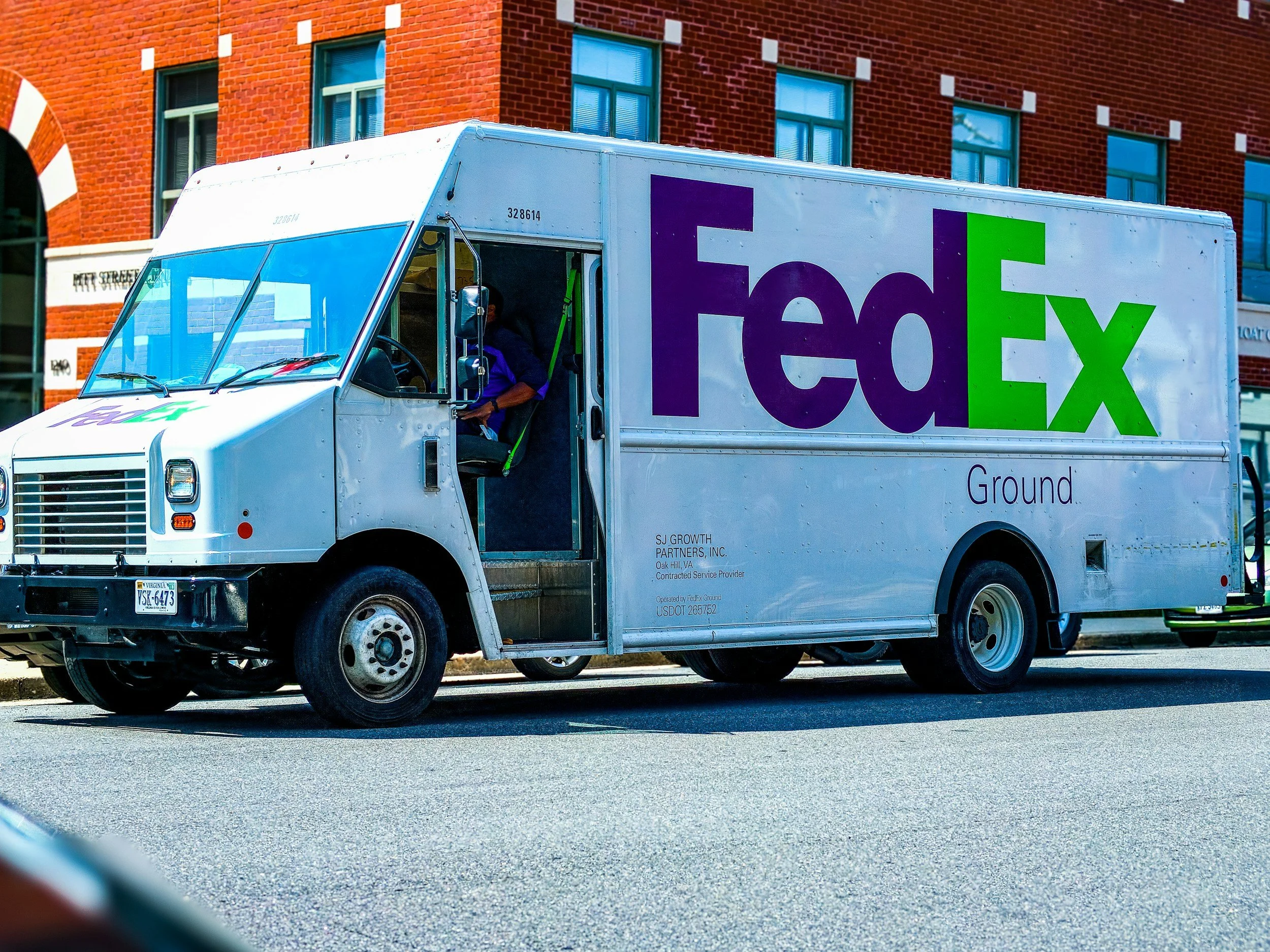
FedEx Ground ISP Guide 2026: Profitability in Network 2.0
If you’ve been in the FedEx Ground space for more than a minute, you know the only constant is "the pivot." But as we move through 2026, we aren't just looking at a minor pivot; we are standing in the middle of a fundamental rewiring of the entire logistics machine.
With Network 2.0—the full-scale integration of Express and Ground—now the standard operating procedure across North America, the line between "Ground contractor" and "Premium Logistics Provider" has officially vanished. If you’re still running your business like it’s 2019, your margins are likely evaporating.
To run a profitable ISP (Independent Service Provider) business today, you have to be more than a fleet manager—you have to be a data scientist, a culture builder, and a ruthless negotiator. Here is the timely, "in the trenches" intel you need to protect your investment, avoid the pitfalls that are sinking others, and actually take home a profit.
Mastering the One FedEx (Network 2.0) Reality
By now, the merger of Express and Ground volumes into a single delivery stream is no longer a "coming soon" threat—it’s your daily reality. For ISPs, this has brought a massive influx of time-definite packages (P1s and P2s) that previously lived on white trucks.
The Pitfall: "Delivery is Delivery"
The biggest mistake contractors are making right now is treating Express volume like standard Ground volume. Express packages come with strict service windows and significantly higher financial penalties for missed deliveries. If your drivers are still "looping" routes based on geographic proximity alone, they are missing 10:30 AM or noon commits, and those service failures are eating your contingency payments.
The Solution: Dynamic Route Intelligence
In 2026, DRO (Dynamic Route Optimization) is your most important tool. You must ensure your BCs (Business Consultants) are not just "setting" routes, but actively adjusting them to prioritize the "time-certain" volume.
Pro Tip: Segment your high-density routes. If a route has more than 15% Express volume, consider a "mid-day sweep" or a dedicated "Express Runner" during peak cycles to protect your service scores without blowing out your Ground driver’s DOT hours.
The "200 Package" Rule: The New Density Play
A major shift in 2026 is the consolidation of pickup scheduling. FedEx has pushed a streamlined rule: If a shipper has fewer than 200 packages for pickup, they no longer need to separate Express and Ground parcels.
Why This Matters to Your Bottom Line
This sounds like a minor administrative change for the customer, but for you, it’s a logistical game-changer. Previously, you might have bypassed a "low volume" Express pickup that an Express driver handled. Now, that stop is yours.
The Profit Opportunity:
This increases your stop density. If you can integrate these small-scale pickups into existing delivery routes without deviating miles, your profit-per-stop increases.
The Operational Trap:
If your drivers aren't prepared for the "merged" pickup, they may miss the scan requirement for Express pieces. Every missed scan on an Express pickup is a high-visibility failure in the new unified network. Train your drivers to treat every pickup as "Hybrid" volume.
Fleet Management & The 10-Year "CapEx" Trap
The fleet requirements in 2026 have tightened. For Linehaul especially, but increasingly for P&D, FedEx has drawn a hard line: No tractors over 10 years old.
Avoiding the "Danger Zone"
If you are looking to buy routes or replace aging equipment, do not buy any road tractor that is already 7 or 8 years old. You are buying a "hot potato" that will be useless in two years.
The $45,000 Surprise:
Engine rebuilds for modern Class 8 tractors are now hitting the $45,000 mark. When you add in two weeks of rental costs at $1,500+ a week, a single major mechanical failure on an aging truck can wipe out a quarter’s worth of profit.
The Strategy:
If your trucks are hitting 500,000 miles or the 6-year mark, start your trade-in cycle now. In 2026, a "preventative replacement" strategy is often cheaper than a "run it till it dies" strategy.
The 2026 Profitability Formula: Combatting the 5.9% GRI
Inflation may have cooled from the peaks of a few years ago, but the 2026 General Rate Increase (GRI) of 5.9% (with some zones hitting nearly 7%) means your operating costs have a high floor.
The Maintenance Trap
Parts and labor costs remain at historic highs. A "wait until it breaks" maintenance strategy is the fastest way to insolvency.
Preventative Maintenance is your Profit Guard:
A missed oil change leads to a blown turbo; a blown turbo leads to a $5,000 repair and a $1,200 rental truck for a week.
Fuel Surcharge Fluctuations:
Utilize fuel cards with deep "behind the pump" discounts. If you aren't saving at least $0.40–$0.60 per gallon via a volume-based fuel program, you are leaving thousands of dollars on the table every month.
The 2026 Labor Market: The "Great Refinement"
The labor market has shifted. Drivers in 2026 aren't just looking for a paycheck; they are looking for stability, professional respect, and safety.
Avoid the "Warm Body" Syndrome
Hiring anyone with a driver’s license is a recipe for high VEDR (Video Event Data Recorder) violations. One "nuclear verdict" or a series of preventable accidents will lead to your non-renewal.
Building a Retention Culture
Profitability is directly tied to retention. Every time you lose a driver, it costs you roughly $5,000 to $7,000 in recruiting, drug testing, and "efficiency lag."
Performance Bonuses:
Move away from flat daily rates. Tie bonuses to Safety (zero VEDR events) and Service (zero missed Express commits).
The "Human" Element:
In 2026, the best ISPs offer basic benefits—health stipends and 401k matching. If you treat your drivers like robots, they will leave you for the first competitor who offers them $0.10 more per stop.
Technology as a Shield, Not a Nuisance
Five years ago, telematics and cameras were seen as "Big Brother." Today, they are your only defense against a litigious society and a demanding FedEx corporate structure.
VEDR and Coaching
If you are only looking at your VEDR portal when an accident happens, you’ve already lost.
The Proactive Approach:
Use AI-driven data to identify "at-risk" behaviors—distracted driving or following too closely—and coach them out before they turn into a claim.
The Insurance Play:
Insurance providers in 2026 are demanding proof of coaching. High-performing ISPs use these metrics to negotiate lower premiums, which can be the difference between a 3% and a 7% profit margin.
Strategic Contract Negotiations
The "Negotiated Agreement" is the most stressful part of an ISP’s life. With the consolidation of the network, FedEx is looking for scale and reliability.
Scale vs. Quality
There is a push for ISPs to get larger. While scale can lead to better back-office efficiency, it can also lead to "management dilution."
Don't grow for the sake of growth. If you can't maintain a 10% EBITDA margin on 20 routes, you won't magically find it on 50 routes.
Use Data in Negotiations: When you go to the table, bring data. Show your service levels, your safety record, and your specific cost-per-mile increases. If you can prove you are a low-risk, high-service provider, you have much more leverage to ask for a higher stop rate.
Conclusion: The Expert’s Outlook
The FedEx Ground ISP model remains one of the few ways to own a multi-million dollar logistics business with a built-in customer base. But the "easy money" is gone.
To succeed in 2026, you must be a Professional Operator. This means:
Embracing Network 2.0 as an opportunity to prove your value with time-sensitive freight.
Micromanaging your P&L to combat the 5.9%+ GRI and surcharge hikes.
Investing in your fleet before the 10-year limit or a $45k engine failure forces your hand.
Optimizing Pickups under the 200-package rule to maximize route density.
The ISPs who survive the next 24 months will be the ones who stop looking at their trucks as "delivery vans" and start looking at them as mobile profit centers. Keep your eyes on the data, your feet in the terminal, and your heart with your drivers.
The volume is there. The question is: Is your business built to keep the profit?