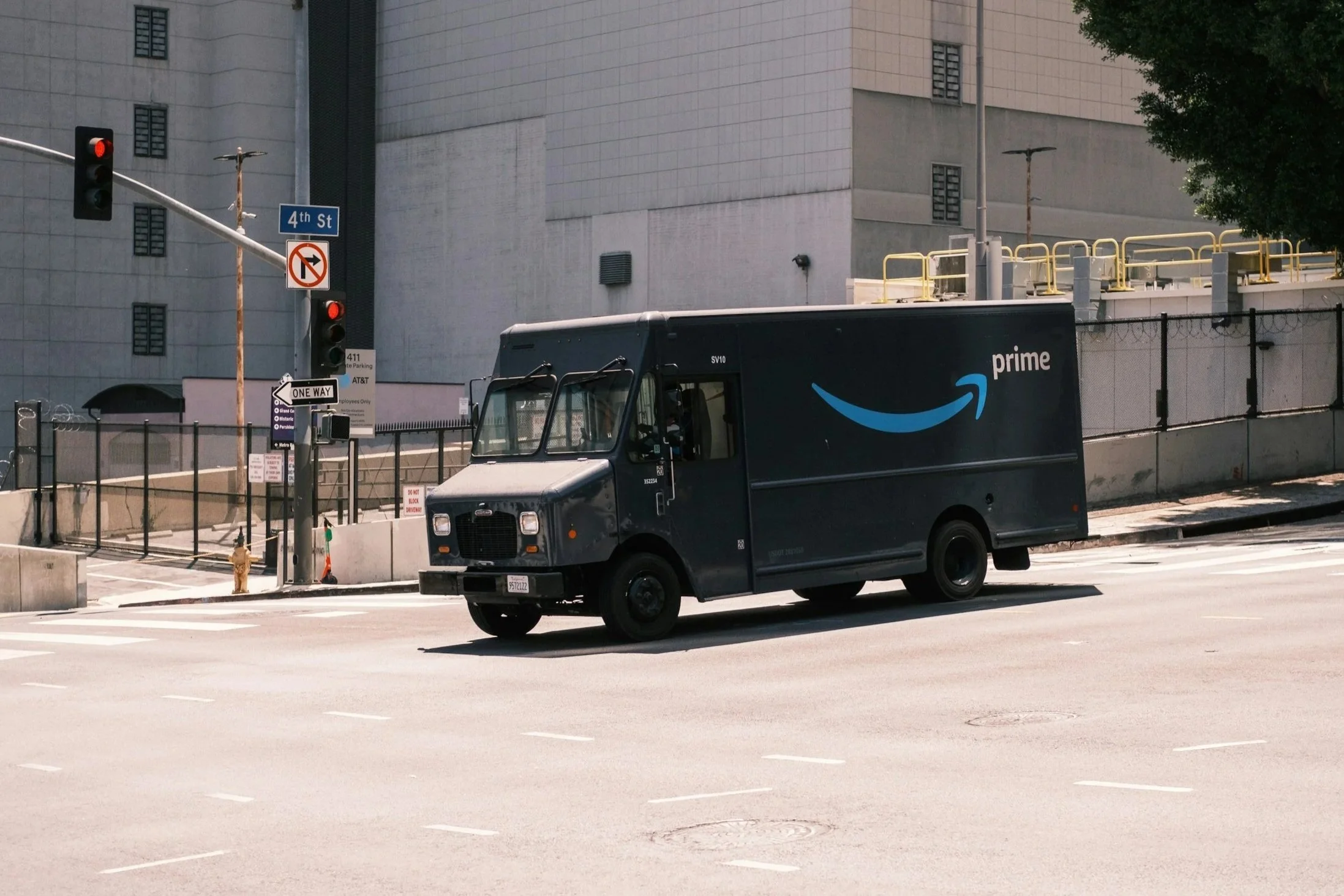
The Amazon DSP Profitability Blueprint
The Amazon Delivery Service Partner (DSP) program is currently undergoing its most significant transformation since its inception. As we move through 2026, the era of "easy growth" has been replaced by a landscape defined by razor-thin margins and extreme operational scrutiny. With Amazon’s recent $1.9 billion investment into the program—including a 20% increase in per-piece rates—it might look like the gold rush is back.
But there’s a catch.
That rate hike came with a mandatory wage floor increase, with drivers now earning between $20.50 and $27.50 an hour. For the owner, this means your largest expense just spiked, and your ability to stay profitable now rests entirely on your ability to master the data, protect your fleet from predatory maintenance costs, and navigate a tightening legal environment. If you aren't treating this like a high-stakes logistics firm, you won't survive the next peak season.
Scorecard Strategy: The "Fantastic Plus" or Bust Mentality
In 2026, a "Great" scorecard is effectively a failing grade. Because of how the incentive structures are now weighted, the bonus difference between "Great" and "Fantastic Plus" can be the difference between a $40,000 profit month and breaking even. You have to stop viewing the scorecard as a weekly report card and start seeing it as your primary revenue source.
The Quality Metrics: POD and DNR
Photo on Delivery (POD) remains the most common way DSPs lose their bonus. Amazon’s 2026 AI filters are far more sensitive than they used to be; they now flag "unclear delivery locations" even if the photo is in focus. You should be running a daily "Wall of Shame" (or "Wall of Fame") during load-out. Show your drivers exactly what a failing photo looks like—shadows, feet in the frame, or "porch-only" shots that don't show the house number.
Delivered and Not Received (DNR) metrics are the other profit killer. In high-theft urban areas, your dispatchers must be proactive. If a driver is in a "red zone," the instructions should be "No Safe Location = No Delivery." It is better to take a hit on your "Delivery Completion Rate" (DCR) than to eat a DNR that tanks your quality score for the week.
Safety and the Netradyne Reality
With the new collision detection systems and upgraded AI cameras being rolled out this year, "Distracted Driving" is harder to hide. However, many owners don't realize that they can—and should—dispute Netradyne events. If the AI flags a driver for "Following Distance" but a third party cut them off, your dispatcher has 48 hours to flag that for manual review. If you aren't disputing at least 5-10% of your safety hits, you’re letting the software dictate your profit.
The Maintenance Crisis: Fighting the "Hidden Tax"
One of the biggest controversies of the past twelve months has been the spike in fleet maintenance costs. We’ve seen reports of repair bills for older branded vans reaching $20,000—ten times the industry average. Between "erroneous VIN fees" and the Pave app’s often inaccurate damage assessments, owners are being bled dry by the very fleet management systems meant to help them.
Audit Your Repair Invoices
Never allow a leasing company or a preferred shop to automatically withdraw funds. You need a "Maintenance Lead"—someone who knows enough about a van's anatomy to look at a $1,000 brake job quote and say, "No, that’s a $400 job." In late 2025, Amazon offered a 20% discount on repairs while investigating billing errors, but that’s a bandage, not a cure.
The Preventive Maintenance (PM) Edge
The most profitable DSPs in 2026 have moved maintenance in-house or onto mobile "night shift" contracts. If a van goes "down" during the day, you lose the route revenue, you pay for a rental (which is a massive margin killer), and you risk a DCR hit.
Tire Rotations: Every 5,000 miles, no exceptions. With the weight of the new Electric Delivery Vehicles (EDVs), tires are wearing out 30% faster than they did on the old Transits.
The "Spare" Strategy: Aim for a 15% spare ratio. If you have 30 routes, you need 35 vans. Using a rental van in 2026 is effectively working for free for that route.
The Labor War: Retention Beyond the Wage Floor
With the 2026 wage increases, you can no longer compete on pay alone—everyone is paying $20.50+ now. To keep your best drivers from jumping to the DSP across the parking lot, you have to fix your culture.
Managing the "Rescue" Culture
Nothing kills driver morale faster than a high-performer being forced to "rescue" a slow driver every single day. You are essentially punishing your best workers for being efficient.
The "Bounty" System: If a driver completes a rescue, pay them a flat fee ($25-$40) per rescue.
The "Vetting" Period: Use the first 30 days to identify "lifers" versus "tourists." If a driver requires a rescue more than twice a week during their ramp-up period, they likely aren't going to make it. It’s cheaper to let them go now than to let them burn out your top-tier drivers.
The "Joint Employer" Risk
You need to be acutely aware of the legal shifts happening right now. With the NYC Council considering legislation to force direct employment of last-mile workers and the NLRB’s ongoing cases, the "separation" between you and Amazon is being tested. To protect your business, ensure your HR practices are 100% independent. Use your own employee handbooks, your own branding on internal memos, and your own performance review systems. Do not just "copy-paste" Amazon’s suggestions.
Operations: Smart Routing and Peak Management
Amazon’s AI-driven routing has improved, allegedly cutting after-dark stops by 50% this year. This is great for safety, but it has made "load-out" more chaotic.
Master the Load-out
Your "Wave Time" is sacred. If your team is taking 25 minutes to load instead of 15, you are losing 10 minutes of delivery time across 30 drivers. That’s five hours of lost productivity every single morning. Use "Bag Captains"—experienced drivers who help the newer ones organize their overflow—to ensure every van leaves the station on the second.
Data Auditing and Disputes
The "Performance Audit" is your best friend. If the station has a "Late Induction" or the sorters miss a cart, your On-Time Departure (OTD) will take a hit. Your dispatchers must keep a digital log of every station-side delay, including timestamps and the names of the Amazon PAs (Process Assistants) on duty. When your weekly scorecard comes out, you use that log to claw back your "Fantastic Plus" rating.
Financial Discipline: The "CFO" Approach
The most successful DSP owners I know don't spend their day in a van; they spend it in a spreadsheet. You need to know your Cost Per Route (CPR) down to the penny.
| Expense Category | 2026 Target % of Revenue | Note |
| Labor (Wages + Tax) | 55% - 60% | The biggest lever you have. |
| Fleet & Fuel | 15% - 20% | Higher for ICE, lower for EDV. |
| Insurance/WC | 5% - 8% | Managed via Netradyne scores. |
| Admin & Misc | 5% | Software, devices, uniforms. |
| Net Profit | 10% - 15% | Only possible with Fantastic Plus. |
The "Reserve" Requirement
Because of the volatility in repair costs and the potential for "T1" infractions that can lead to immediate contract termination, you must maintain a "War Chest." A 90-day cash reserve is the standard for 2026. This allows you to weather a bad month or a fleet-wide recall without missing payroll.
The Path Forward: Scale with Sanity
Growth for the sake of growth is a trap. I have seen owners go from 20 routes to 40 routes and actually decrease their take-home pay because their quality metrics slipped and their "Fantastic Plus" bonus vanished.
The goal isn't just to have the most vans in the station; it’s to have the most efficient operation. In 2026, that means being a data-driven leader who treats their drivers like professionals and their fleet like a high-performance machine. You aren't just delivering packages; you are managing a high-frequency, tech-enabled logistics business. Act like it.
The Bottom Line
Master your scorecard, audit every repair bill, and treat your high-performing drivers like gold. If you can do those three things, you’ll be in the top 5% of partners who aren't just surviving, but actually building a legacy.
How much of your 20% rate increase is currently being swallowed by "silent" maintenance costs or poor safety scores?
What’s on the 2026 Horizon?
Rural Expansion and the New DSP Identity
As we look toward the remainder of 2026 and into 2027, the DSP landscape is shifting geographically and technologically. Amazon’s $4 billion commitment to rural delivery expansion is not just a corporate milestone; it’s a strategic pivot that will define the next generation of top-tier partners. If your station is in a suburban or urban hub, you are already seeing the density "cap." The real growth is now happening in the rural delivery network (RDN), where route complexity and vehicle wear-and-tear are significantly higher.
To succeed in this new environment, you have to move beyond being a "delivery company" and start operating like a high-tech logistics firm.
The Shift to Rural Logistics
In rural markets, the "stops-per-hour" metric is lower, but the "risk-per-mile" is substantially higher. Gravel roads, limited cellular connectivity for the Rabbit, and increased mileage mean your maintenance costs will be your primary point of failure. Owners who transition to a rural-ready fleet strategy—investing in higher-clearance vehicles and robust off-road tire programs—will be the ones who secure these high-revenue, long-distance contracts.
The Rise of "Pro-Active" Advocacy
We are also seeing the rise of professional DSP networks and advocacy groups, such as the DEFT DSP network. In 2026, the "lonely owner" model is dying. The most successful partners are those who are sharing data with their peers to identify trends in Amazon’s AI-driven scorecard shifts before they become contract-threatening issues. If a new safety metric like "Dynamic Cornering" is introduced, the top 5% of DSPs are already training their drivers on it before it even goes live on the dashboard.
Conclusion: From Dispatcher to CEO
The "Gold Rush" era of the Amazon DSP program is over, but the "Professional Era" is just beginning. The 20% rate increases we’ve seen this year are a clear signal: Amazon is willing to pay for quality, but they have zero tolerance for operational "leakage."
If you are still spending your Tuesday mornings fixing a broken van or chasing down a driver who didn't show up for their shift, you are a dispatcher, not an owner. To scale and sustain a DSP in 2026, your focus must remain on the three things that actually move the needle:
Data Integrity
Auditing every scorecard hit and disputing every unfair Netradyne event.
Asset Protection
Moving away from reactive repairs and into a rigid, data-backed preventive maintenance schedule.
Human Capital
Building a culture where the "Fantastic Plus" bonus isn't just your profit—it’s shared success for the drivers who earned it.
The DSP program is a marathon of inches. You don't win by making one massive change; you win by saving $2 on every tire, $5 on every rescue, and $1,000 on every weekly bonus. Guard your margins, lead your people, and never stop auditing the data. That is the only blueprint for long-term survival in the world’s most competitive logistics ecosystem.
Are you running your DSP based on what you see in the station, or what you see in your P&L?