
If you are reading this, you’re likely a visionary, a community leader, or a dedicated volunteer. You didn't get into this work because you have a deep-seated passion for bookkeeping or the nuances of tax law; you did it because you saw a problem in the world and decided to fix it. But, as your trusted advisor, I’m going to offer a reality check: Passion is the engine, but accounting is the oil. Without clean, transparent financials, even the most noble mission will eventually die.

In the world of 501(c)(3) organizations, accounting is not just a back-office chore. It is the primary language of stewardship. While for-profit businesses exist to generate wealth for owners, nonprofits exist to fulfill a social mandate. This fundamental shift changes everything about how money is tracked, reported, and guarded. This guide is your nonprofit accounting for beginners manual and an overview of nonprofit financial statements.
The Philosophy: Stewardship Over Profitability

In a business or corporation, the "bottom line" is the ultimate measure of success. If you sell more than you spend, you win. In a nonprofit, we prioritize the "double bottom line." The first is your social impact, and the second is your financial health.
We don't track "profit"; we track the "Change in Net Assets." When a business owner makes a profit, they can take a dividend. When a nonprofit generates a surplus, that money is legally "locked" into the mission. Because of this, nonprofit accounting focuses less on wealth creation and more on proving to the public that every dollar was used exactly as promised.
Fund Accounting: The "Bucket" System

Nonprofit organizations typically do not use one big pot of money. We use "buckets," professionally known as Fund Accounting.
Imagine a donor hands you $10,000 and says, "Use this only for the new youth literacy program." If you use that money to pay the office rent instead, you haven't just made a bookkeeping error; you’ve breached a legal and ethical contract. Fund accounting allows you to segregate these resources into separate buckets so you can prove, at any moment, that the literacy money stayed exactly where it belonged.
Understanding the Categories of Net Assets
Following the Financial Accounting Standards Board (FASB) update in 2016, reporting requirements were simplified to make financial statements easier for non-accountants to read. We now categorize all money into two groups:

Net Assets Without Donor Restrictions: This is your general operating cash. The board can decide how to spend this to keep the lights on and the programs running.
Net Assets With Donor Restrictions: This is money with "strings attached." These strings might be purpose-based (e.g., "Buy 100 trees") or time-based (e.g., "This is for next year's budget").
As an advisor, I often see boards make the mistake of looking at a high bank balance and feeling "rich," only to realize 90% of that money is restricted. Never confuse cash flow with available cash.
The "Big Three" Financial Statements
To lead effectively, you must know how to read three specific reports. These aren't just lists of numbers; they are the "vitals" of your organization’s health.
| Report Name | For-Profit Equivalent | What it Tells You |
|---|---|---|
| Statement of Financial Position | Balance Sheet | What you own (assets) vs. what you owe (liabilities) at a specific moment. |
| Statement of Activities | Income Statement (P&L) | Your revenue minus your expenses over a period (month/year). |
| Statement of Functional Expenses | N/A (Unique to Nonprofits) | A breakdown of spending by category: Program, Admin, and Fundraising. |
The Statement of Financial Position
This is a snapshot of your organization on a specific day. It follows the fundamental accounting equation:
Assets = Liabilities + Net Assets
If your assets aren't significantly higher than your liabilities, you are living on the edge.
The Statement of Activities
This report tracks the movement of funds from restricted "promise" buckets to unrestricted ones as work is performed, effectively serving as your organization's financial story for the year.
It replaces the concept of "profit" with the Change in Net Assets, revealing whether you are building a sustainable reserve or depleting your savings to stay operational.
The Statement of Functional Expenses
This is the report donors and watchdog groups (like Charity Navigator) care about most. It forces you to categorize every dollar spent into one of three "functions":
Program Services: Direct costs of your mission (e.g., food for a pantry).
Management & General: The "overhead"—rent, accounting, HR, and insurance.
Fundraising: The cost of asking people for money (e.g., gala events, mailers).
The "Overhead Myth" and Efficiency

There is immense pressure on nonprofits to keep "overhead" low. You’ve likely heard donors say, "I want 100% of my gift to go to the cause." While well-intentioned, this is a dangerous fallacy. You cannot help people if you don't have a roof, a computer, or a way to pay the professional staff doing the work.
However, you must manage your efficiency ratio. Most healthy nonprofits aim to spend at least 65% to 80% of their total budget on Program Services. If your fundraising costs are consistently 40% of your budget, you will eventually face a crisis of public trust.
Revenue Recognition: When is a Dollar a Dollar?
In nonprofit accounting, we generally use accrual-basis accounting. This means we record revenue when it is promised, not necessarily when the check clears.

Pledges: If a donor signs a pledge card for $20,000 to be paid over two years, you record that revenue now (subject to certain rules).
Grants: Some grants are "conditional." If a grant says "We will give you $10,000 if you reach 500 students," you cannot record that revenue until you actually reach the 500th student.
This can create a "phantom wealth" effect where your books look great, but your bank account is empty. Always watch your Cash Flow Forecast alongside your Statement of Activities.
Internal Controls: Trust is Not a Control
I’m going to be firm here: Trust is not a financial strategy. I have seen many organizations devastated—not by outside hackers, but by "trusted" long-term employees who found a loophole in a loose system.
You must implement Segregation of Duties. At a minimum:
The person who opens the mail and logs checks should not be the person who deposits them.
The person who approves a bill for payment should not be the person who signs the check.
A Board member (or someone who does not have check-signing authority) should review bank reconciliations monthly.
These controls aren't about being suspicious; they are about protecting your staff from blame and protecting your board from liability.
Compliance and the IRS Form 990
The IRS Form 990 is your organization’s most important marketing document. Why? Because it is public record. Sites like GuideStar and ProPublica publish these for the world to see. It tells the story of your governance, your executive pay, and your program results.
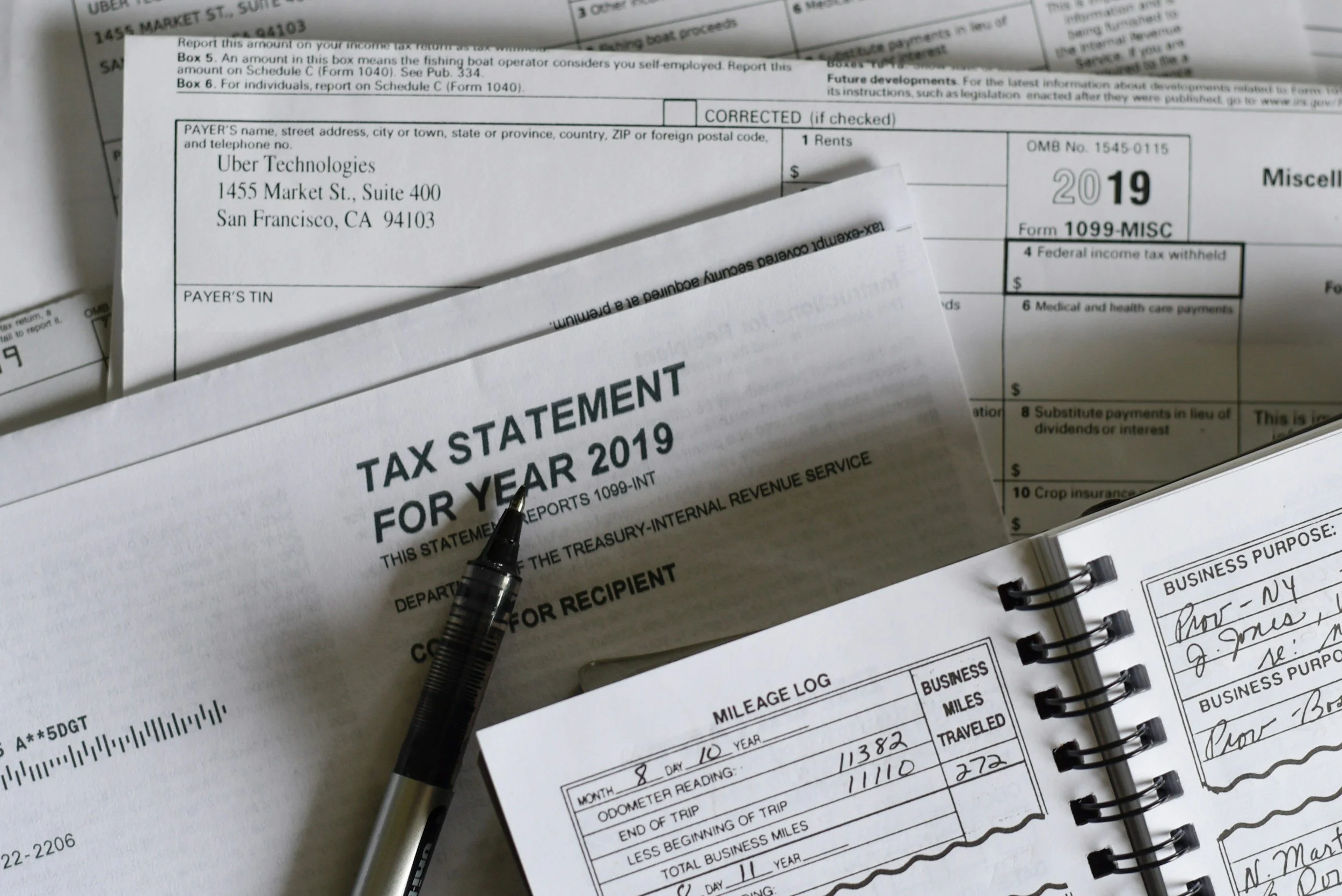
Filing this correctly and on time is non-negotiable. If you fail to file for three consecutive years, the IRS will automatically revoke your tax-exempt status. Reinstating it is a bureaucratic nightmare that often requires thousands in legal fees.
Do You Need an Audit?
Not every nonprofit needs a full financial audit, but many do based on three triggers:
State Law: Many states require an audit once you cross a revenue threshold (often $500,000+).
Grantors: Foundations often require an audit to ensure their money is safe.
The Board: A diligent board will often request a "Review" or "Audit" to fulfill their fiduciary duty.
Conclusion: Managing the Mission
Accounting is the "scorecard" of your impact. When your records are organized and your reports are transparent, you empower your board to make strategic, fearless decisions. You aren't guessing if you can afford a new hire; you know.
Remember, the goal of nonprofit accounting is not to have the most money; it is to have the most integrity in how that money is used. Treat your financial records with the same respect you treat your mission, and the community will reward you with their trust.