
There comes a point in every business where the problem is no longer getting customers— it’s keeping everything running smoothly.
Revenue is coming in. Work is getting done. But behind the scenes, things feel harder than they should.

Simple tasks take longer than expected. Your team asks the same questions repeatedly. Small issues turn into bigger problems because there isn’t a clear way to handle them.
From the outside, the business looks like it’s growing. But on the inside, it feels disorganized, inefficient, and increasingly dependent on you to keep everything moving.
This is the stage where most business owners realize they don’t have a sales problem—they have a workflow and process problem.
This is where a Virtual Chief Operating Officer (COO) makes the difference.
Why Your Business Feels Disorganized and Hard to Manage
Most business owners never think to search for a “Chief Operating Officer.”
They search for things like:
“how to make my business run more efficiently”
“how to fix a disorganized business”
“how to improve workflow”
“why does my team keeps making mistakes”
“how to scale without everything breaking”

What you’re experiencing is not a lack of effort—it’s a lack of structure.
As a business grows, the informal processes that once worked begin to break down. What used to be handled through quick decisions and direct oversight becomes harder to manage as volume increases.
Tasks get duplicated. Communication becomes inconsistent. Workflows vary depending on who is involved.
Over time, this creates friction across the entire business.
You find yourself stepping in more often to fix issues, answer questions, and keep things on track. The business becomes more dependent on you, not less.
What a Virtual COO Actually Does for Your Business
A Virtual COO brings structure, consistency, and accountability to how your business operates day-to-day.
A Virtual Chief Operating Officer from our firm, will focus on improving workflows, streamlining processes, and building systems that allow your business to run efficiently without constant oversight.
This begins with understanding how work currently gets done. Every business has processes, even if they are not formally defined. A Virtual COO evaluates these workflows to identify where breakdowns occur—where time is being lost, where errors are happening, and where inconsistencies are creating problems.
From there, the focus shifts to redesigning those processes so they are clear, repeatable, and efficient.
The goal is not to add complexity. It is to remove unnecessary steps, eliminate confusion, and create a structure that allows work to move smoothly from start to finish.
Improving Workflow So Work Actually Flows
One of the most common issues in growing businesses is that work does not move efficiently between people or stages.
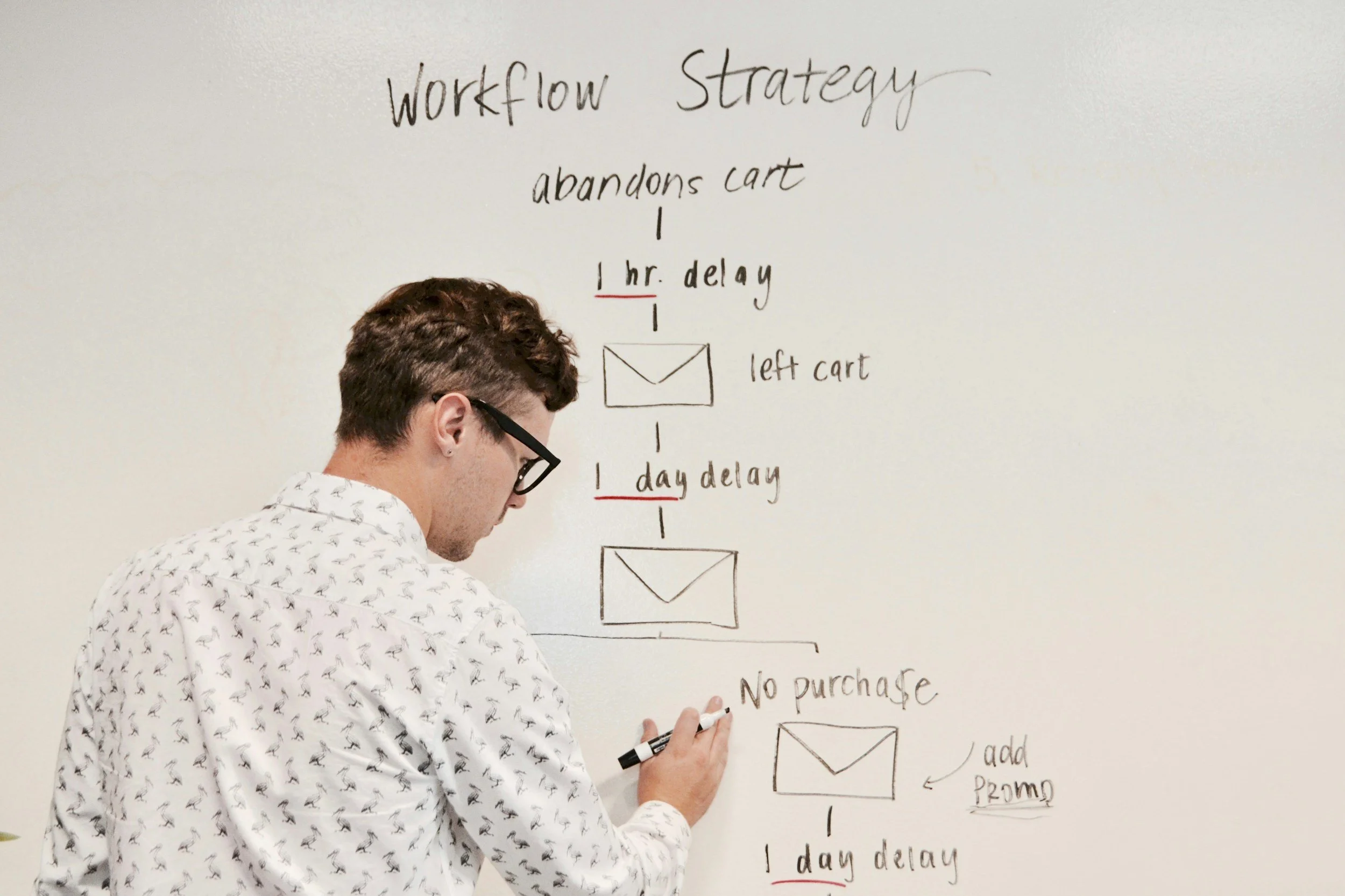
Tasks get delayed because expectations are unclear. Work has to be redone because instructions were inconsistent. Team members rely on memory instead of a defined process.
A Virtual COO addresses this by creating workflows that are easy to follow and consistent across the business.
Instead of relying on individuals to figure things out, the process itself guides the work. Each step is defined. Responsibilities are clear. Handoffs between team members are structured.
This reduces mistakes, improves speed, and creates a more predictable outcome.
Over time, this kind of structure transforms how the business operates. Work becomes more consistent. Issues are resolved at the process level instead of repeatedly at the individual level.
Reducing Inefficiency and Controlling Costs
Operational inefficiencies often go unnoticed because they are spread across the business. A few extra minutes here, a duplicated task there, a miscommunication that leads to rework—individually, these may seem minor.
Collectively, they create significant cost.

A Virtual COO helps identify where time and resources are being wasted and implements changes that improve efficiency without sacrificing quality.
This may involve adjusting workflows, improving coordination between team members, or refining how resources are allocated. The result is a business that operates more effectively with the same—or even fewer—resources.
As efficiency improves, so does profitability. Not because revenue increases, but because the business is no longer losing value through inefficiency.
Building Systems That Support Growth Instead of Slowing It Down
Growth often exposes operational weaknesses. What worked at a smaller scale begins to fail as demand increases.
Without structured processes, growth leads to more confusion, more errors, and more pressure on the business owner.
A Virtual COO ensures that your operations are built to scale.

This means creating systems that can handle increased volume without requiring constant oversight. Processes are standardized so that work is done the same way every time, regardless of who is involved. Performance is tracked so issues can be identified early.
For businesses with multiple locations or teams, this level of consistency becomes critical. Without it, each part of the business begins to operate differently, making it difficult to maintain quality and control.
With the right operational structure in place, growth becomes more manageable. Instead of creating stress, it becomes something the business is prepared to handle.
What Changes When Your Operations Are Structured
Before implementing operational structure, most business owners feel like they are constantly putting out fires.
They are involved in too many decisions. They are answering the same questions repeatedly. They are stepping in to fix problems that should not exist in the first place.
After improving workflows and processes, that dynamic begins to change.
The business runs with more consistency. The team operates with greater clarity. Fewer issues require direct involvement.
You spend less time managing day-to-day execution and more time focusing on higher-level decisions.
This is the shift from a business that depends on you to a business that is supported by systems.
Why Process Improvement Becomes Critical as You Grow
In the early stages of a business, flexibility is an advantage. Informal processes allow you to move quickly and adapt as needed.
As the business grows, that same lack of structure becomes a liability.
Without defined workflows, inefficiencies multiply. Without clear processes, mistakes become more frequent. Without systems, growth creates instability instead of progress.
This is why process improvement is not optional for growing businesses—it is necessary.
A Virtual COO provides the structure needed to move from reactive problem-solving to proactive operational management.
How This Fits Into Our 3 Solution Centers
Within our firm, each solution center plays a distinct role in improving how your business operates:
The Controller ensures your financial data is accurate and reliable
The Virtual CFO provides financial direction and decision-making support
The Virtual COO ensures your workflows and processes support that direction
Together, these functions align your numbers, your strategy, and your day-to-day operations.
The Bottom Line
If your business feels disorganized, inefficient, or overly dependent on you, the issue is not effort—it’s structure.
A Virtual COO helps you improve workflows, streamline processes, and build systems that allow your business to run more efficiently as it grows.
It’s not just about fixing problems—it’s about creating a business that operates with consistency, clarity, and control.
This is where structure replaces chaos—and where growth becomes sustainable.